Quiet Commercial Hand Dryers for Sound-Sensitive Washrooms
AOLQ helps commercial buyers select hand dryers for spaces where sound matters. Compare model-specific noise information alongside drying time and the planned installation position, rather than judging the dryer by appearance alone. Our team can help coordinate the selected housing and brand presentation with your washroom design once the operating priorities are defined.
Choose a Quieter Hand Dryer Without Ignoring Performance
Start with AOLQ’s commercial hand dryer range, then shortlist by verified sound data, test distance, operating mode, drying result, sensor response, voltage, projection and service access. Confirm the exact model and working conditions on a representative sample.
Models With Documented Sound Data
Shortlist only models with a current sound value and stated test context. Reconfirm distance, operating mode and room conditions before using a sound claim in a specification.
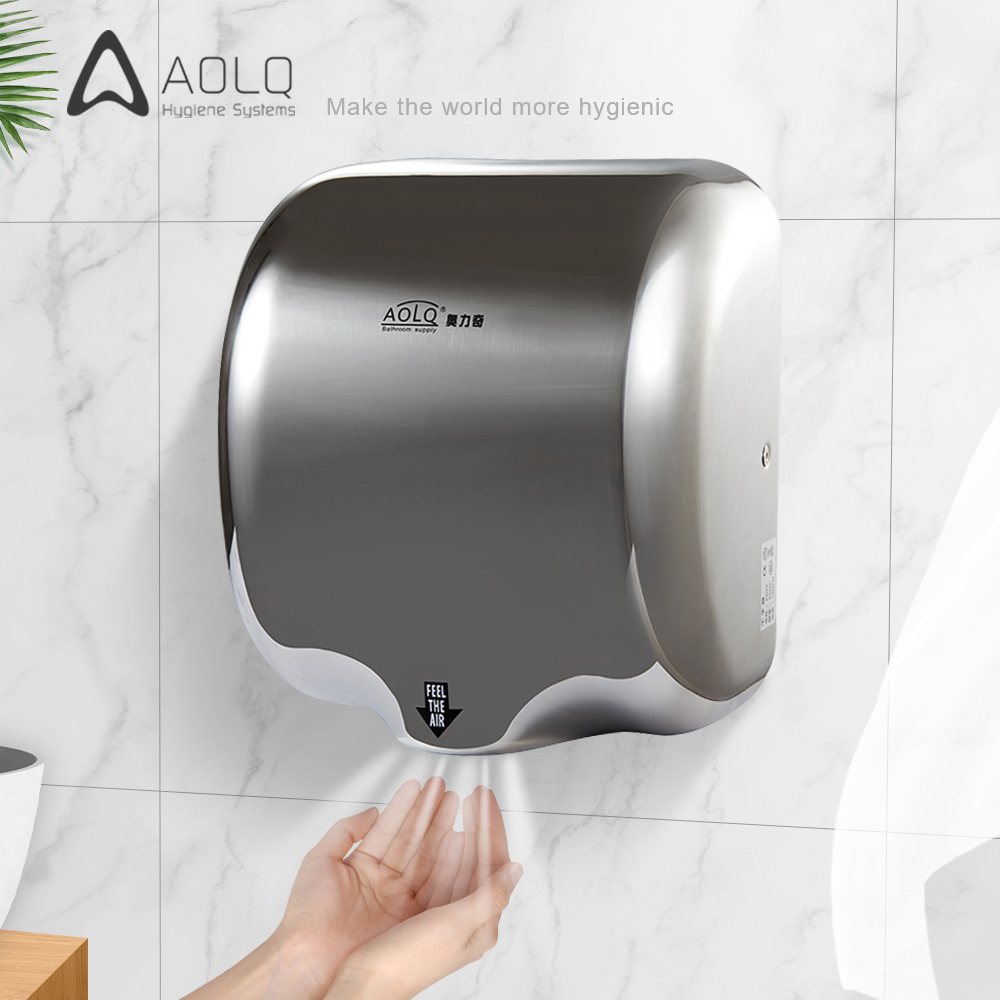
A conventional airflow profile may suit sound-sensitive spaces where maximum drying speed is not the only priority. Compare time, comfort, power and sound together.
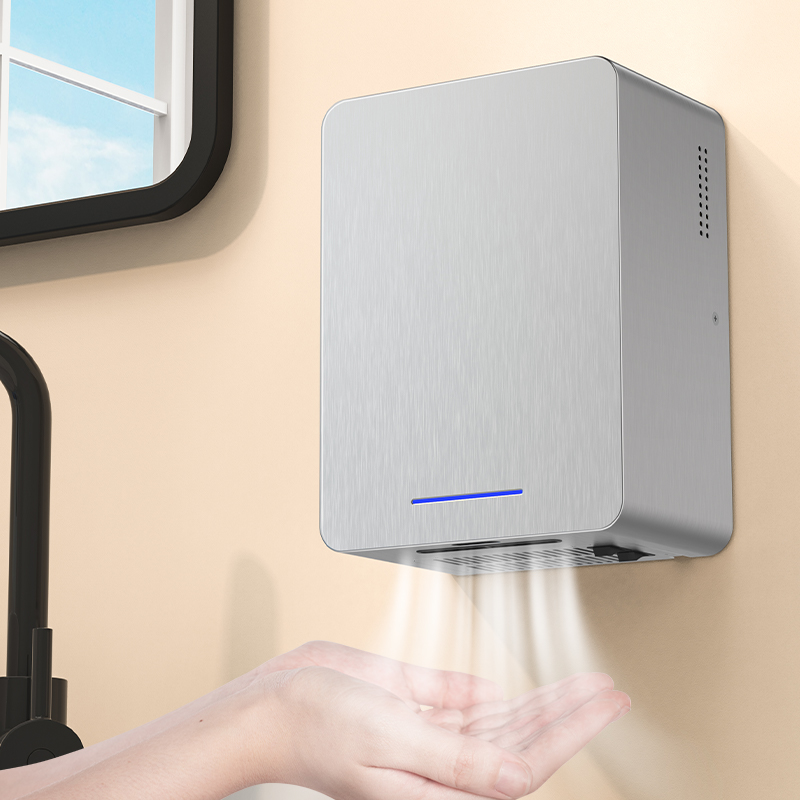
Plastic-housing models can offer a practical fit for offices, schools and similar projects. Quiet suitability must still be confirmed for the selected model and room.
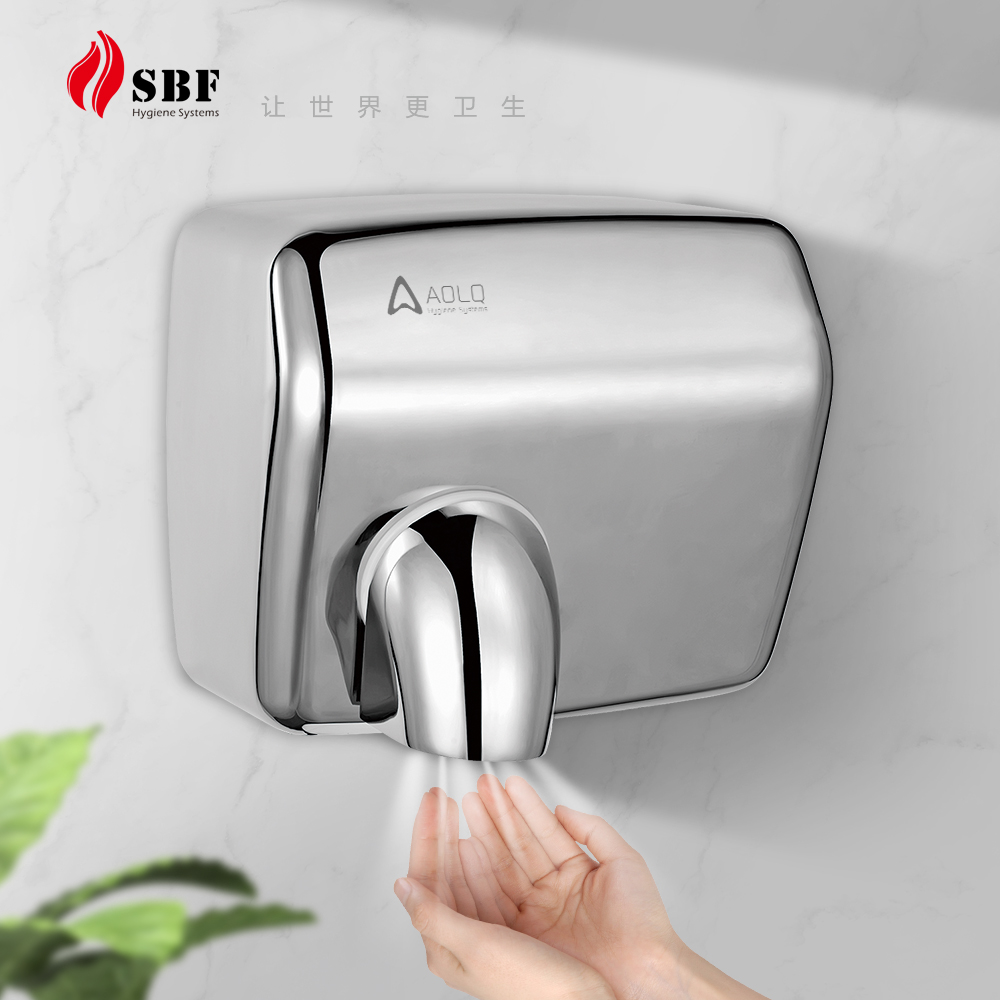
Metal housings suit projects that prioritize finish and frequent cleaning. Check vibration, mounting surface and sound evidence for the exact configuration.
Touch-free activation supports an intuitive user flow. Review sensing distance, run-on behavior and false activation because unnecessary cycles add noise and energy use.
AOLQ: Commercial Hand Dryers for Sound-Conscious Interiors
AOLQ is a hand dryer manufacturer supporting quiet commercial hand dryer enquiries. Our range includes models with different sound characteristics and drying formats, giving washroom suppliers options for offices, restaurants and other indoor settings.
AOLQ’s dryer development covers the motor, airflow and housing rather than a single noise claim for the whole range. Conventional warm-air and high-speed models provide different operating profiles, and their sound figures need to be compared under the stated conditions. We also support OEM/ODM finish and branding discussions around the selected unit. Ask us about the hand dryer options for your interior.
Define the Sound Target Together With Drying and Installation Needs
A quieter result depends on the machine, room and installation. Give suppliers a testable brief instead of using ‘quiet’ as an undefined adjective.
Sound Target and Test Context
Set a sound target together with the test distance, operating mode and room conditions. Compare only model-specific results measured under stated conditions.
Confirm destination voltage, frequency, wiring or plug method and heater configuration before quotation. Record the approved electrical label for production.
Select the available housing and finish for cleaning chemicals, wear and the washroom interior. Review visible finish and assembly quality on the sample.
Finalize supported logo placement, rating labels, instructions, carton marks and protective packaging after the electrical and functional configuration is approved.
Demonstrate Sound, Airflow and Service Access Honestly
Use video to show activation, normal operation and shutoff at a stated distance and environment. Add installation, rating-label and maintenance close-ups. Avoid editing that masks operating sound or presents unverified test graphics.
Approve the Sound-Sensitive Hand Dryer Configuration Before Production
Before the production order, review verified sound data, test distance, operating mode, drying result, sensor response, voltage, projection and service access on the intended model. Record the exact model, conditions and result used during the sample check.
Do not publish a quiet or dB claim without current model-specific data stating the test method, distance and operating condition.
Quiet Commercial Hand Dryer FAQ for Commercial Buyers
What noise level counts as quiet for a commercial hand dryer?
There is no useful category answer without a test context. Compare the exact model at a stated distance and operating condition, then judge it against the room and project requirement. Record the method so shortlisted products are compared consistently.
Which AOLQ models currently have a published low-noise figure?
Existing AOLQ product-page content identifies HQ-2030 and HQ-3030 at 54 dB or below. That figure is model-specific and should be reconfirmed with current supporting data and test context before it is used in final public or contractual claims.
Does a quieter dryer take longer to dry hands?
Not always, but sound, air velocity, heat, power and drying time can involve trade-offs. Compare the complete performance profile and traffic requirement instead of optimizing one number in isolation.
Why can the same dryer sound louder after installation?
Hard tile, small rooms, corners and rigid mounting can increase perceived sound or vibration. Include wall construction and room layout in the sample review, and follow the approved mounting method.
Can the housing, logo and packaging be customized?
OEM/ODM support is available for suitable models. Confirm the supported housing and finish, electrical rating label, logo method, instructions and packaging only after the performance configuration is selected.
What information is needed for a quiet hand dryer quotation?
Send the project type, sound target or comparison requirement, expected traffic, voltage and frequency, heater preference, housing preference, wall details, quantity, destination and branding requirements.
Get a Model-level Quiet Hand Dryer Comparison
Share the room type, expected traffic, sound requirement, voltage and frequency, heater preference, mounting surface, quantity and destination. If you have a test method or acoustic limit, include it so shortlisted samples can be compared on the same basis.