
Automatic soap dispensers detect a hand, use an electronic controller to trigger a powered pump, dispense soap, then stop and reset. In an active infrared design, the sensor detects reflected infrared light. The controller drives the motor and pump for a programmed cycle. Liquid pumps deliver soap; foam pumps mix a compatible formula with air. Sensing distance, dose, power supply and repeat-dispense behavior vary by model.
To a guest, a hands-free soap dispenser is a simple touch of modern convenience. To a facility manager or project specifier, it’s a precision electromechanical system that must perform flawlessly tens of thousands of times per year. A failure isn’t just an inconvenience; it’s a maintenance call, a potential mess, and a mark against the facility’s standard of care.
Understanding the internal mechanics—from the initial optical signal to the final mechanical pump action—is crucial for distinguishing a short-lived gadget from durable, commercial-grade hardware. This guide provides a transparent breakdown of the core stages inside a modern automatic soap dispenser: detection, processing, fluid delivery, and power management.

Automatic Soap Dispenser Components: Functions, Faults and Checks
| Component | Function | Possible fault or symptom | How a buyer can verify |
|---|---|---|---|
| Sensor | Detects a hand in the intended sensing area. | Missed activation or false triggering. | Confirm the specified range; check response at the intended basin under actual lighting and reflections. |
| Control board | Validates the signal and controls the dispensing cycle. | Unexpected repeat doses or failure to reset. | Check the stated dose settings and test hand removal, re-entry and sustained hand presence. |
| Motor and drive | Provides mechanical force to operate the pump. | No dispensing, unusual noise or stalled operation. | Check supply voltage, operation with the approved soap and maintenance instructions. |
| Liquid or foam pump | Moves liquid, or mixes compatible foaming soap with air. | Inconsistent output, poor foam or blockage. | Confirm the approved formula, priming procedure and dose specification; compare repeated doses under stated conditions. |
| Outlet and seals | Directs soap to the user and helps control residual flow. | Drips, leakage or soap residue. | Observe the outlet between cycles and inspect seals according to the model’s instructions. |
| Power supply | Supplies energy for the sensor, controller and motor. | Intermittent activation or low-power warnings. | Confirm battery or adapter ratings and any battery-life test conditions; check maintenance access. |

The diagram and table describe a general operating sequence. AOLQ’s pump and electronics overview describes the available pump, control and power options. Confirm the selected model’s specification and installation instructions before applying these checks.
1. The Optical Interface: How Sensors Recognize Human Presence
An active infrared touchless dispenser uses an emitter and receiver to detect a hand near the outlet. Other designs may use a different sensing method, so the detection mechanism should be confirmed for the selected model.
Active Infrared (IR) Projection
Inside the dispenser, a carefully paired emitter and receiver work in tandem. An infrared light-emitting diode (LED) acts as the emitter, pulsing a cone of invisible light downward into the sink basin. When a user’s hand enters this field, the skin reflects the IR light back up toward a photodiode sensor, which acts as the receiver. Once the receiver detects a reflected signal of sufficient strength, it alerts the control circuit that a hand is present.
Eliminating False Triggers
Low-quality sensors can be easily confused. Highly polished chrome faucets, standing water on a vanity top, or even bright, direct sunlight can cause unwanted reflections, leading to “ghost dispenses” that waste soap and create a mess.
Some active infrared designs use modulated light and optical shielding to help distinguish a valid reflected signal from ambient interference. Performance depends on the sensor, control logic and installation. Confirm the specified sensing range for the chosen model, and check operation near reflective basins, water and the lighting conditions of the intended location.
2. The Logic & Motor Drive: Converting Signals into Action
Once a hand is confirmed, the system’s brain and muscle take over.
The Microcontroller Unit
An automatic dispenser uses an electronic control circuit, which may include a microcontroller, to interpret the sensor signal and initiate a dispensing cycle. The controller design and response timing vary by model.
The controller determines how long the pump runs and when another dose can be triggered. Some models dispense once and wait for hand removal; others permit repeat doses according to their programmed logic. Confirm the selected model’s dose settings and reset behavior rather than assuming every unit delivers only one dose while a hand remains in place.
Motor Torque and Gear Reduction
The MCU sends a signal to a low-voltage DC micro-motor. While the motor itself spins at a high RPM, this speed is channeled through a compact reduction gearbox. This assembly converts high speed into the steady, high-torque rotational force necessary to physically move thick liquids or drive a foaming mechanism. The quality of these gears is a primary determinant of a dispenser’s service life.
3. Fluid Dynamics: How Liquid and Foam Are Handled Mechanically
The final stage is the physical movement of soap from the reservoir to the user’s hand. The specific mechanism depends on the type of soap being dispensed.
Peristaltic and Piston Pumps
For liquid or gel soaps, a motor may drive a piston or peristaltic pump, depending on the design. The pump moves a measured amount of compatible soap from the reservoir to the outlet. Valves or other outlet features may help limit dripping, but their construction and performance differ between models. Check soap compatibility, seals, priming and leakage under the intended operating conditions.
Atmospheric Aeration for Foam
A foam dispenser uses a more complex, dual-stage process. During foaming pump operation, the mechanism simultaneously combines a low-viscosity (watery) soap formula with air. As the liquid is drawn into the pump chamber, it passes through a fine mesh screen. At the same time, an air channel pulls atmospheric air into the chamber. The pump mixes the low-viscosity foaming soap with air and forces the mixture through a fine mesh or foaming chamber, producing foam at the nozzle.
The Refill System: Open Reservoirs vs. Proprietary Cartridges
Beyond the pump itself is the critical choice of refill system. Commercial-grade dispensers are typically designed with open-system, bulk-refill reservoirs. This means facilities are not locked into expensive, single-source proprietary soap cartridges. Instead, maintenance staff can purchase cost-effective bulk containers of soap (e.g., 1-gallon or 5-liter jugs) and simply top-up the dispenser’s internal tank. Over the life of a facility, this freedom from a locked-in consumable supply chain can dramatically reduce operational expenses.
4. Power Architecture: Balancing Longevity and Installation Constraints
A dispenser’s reliability is directly tied to its power source. Commercial applications demand efficiency and long-term stability.
Battery Operation (DC Power)
Many wall-mounted soap dispensers use battery power for installation flexibility, while rechargeable automatic soap dispensers provide another power option. Battery life depends on battery type and condition, dose setting, motor load, traffic and standby consumption. Compare model-specific battery-life information only when the test conditions are stated, and plan access for replacement or charging.
Hardwired Configurations (AC Power)
For new construction projects or locations with a suitable power supply, an adapter-powered dispenser can reduce routine battery replacement. Confirm the approved adapter, voltage, outlet position and installation requirements for the selected model. An external power supply does not remove the need for cleaning, refilling or functional checks.
5. Aligning Touchless and Manual Fixtures by Zone
When comparing automatic versus manual dispensing, the right technology depends on the specific environment. A smart facility plan uses different fixture types for different zones.

Front-of-House Guest Restrooms
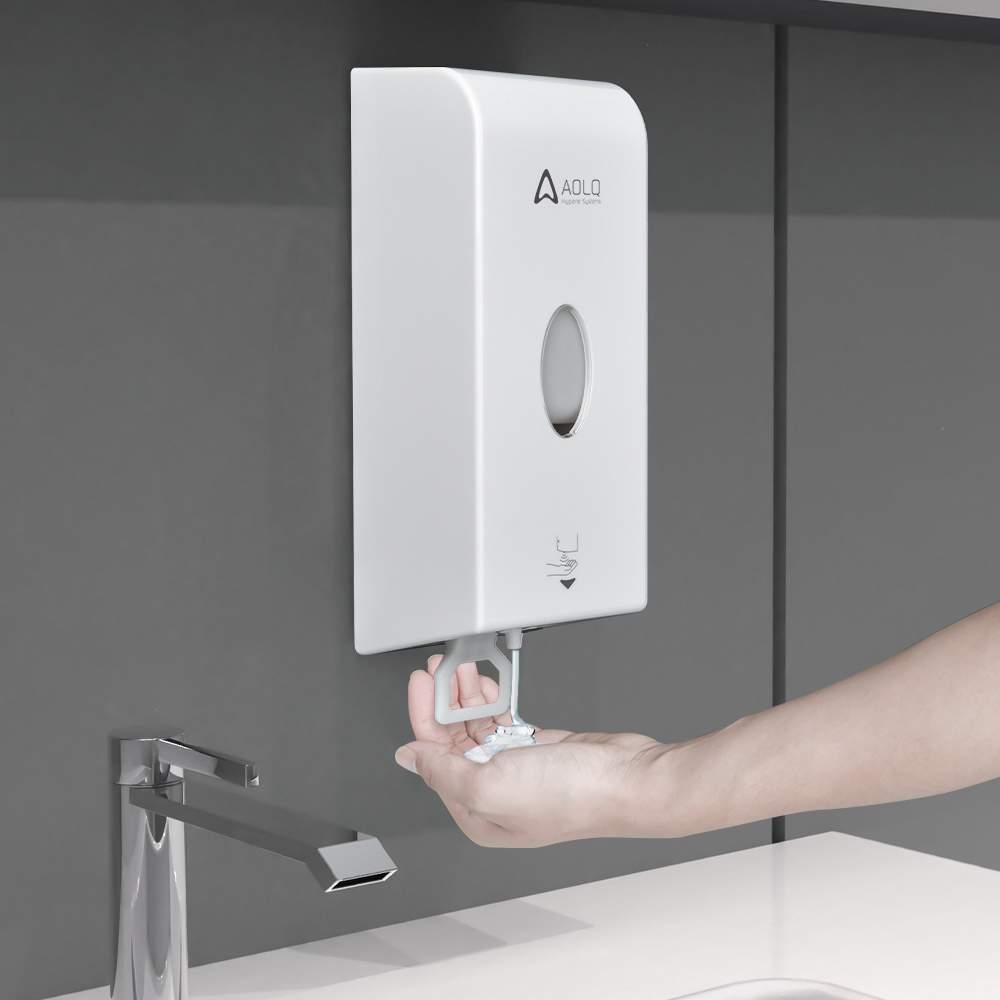
Recommended: Touchless Automatic Systems In areas where customer experience, hygiene perception, and architectural aesthetics are paramount—such as airport terminals, corporate headquarters, and hotel lobbies—hands-free dispensers are the standard. They maintain cleaner, drier countertops and accelerate user flow through busy washroom banks.
Service Corridors and Back-of-House Areas
Recommended: Heavy-Duty Manual Systems In zones where mechanical simplicity and extreme durability are the priority—like loading docks, industrial workshops, and maintenance closets—a heavy-duty manual push-bar dispenser is often a better fit. These rugged, zero-power units provide reliable dispensing without reliance on power lines or battery cycles.
Engineering Reliability into Every Washroom Project
A dependable automatic soap dispenser is a product of balanced engineering. It requires a precisely calibrated optical sensor, a durable high-torque gearbox, and a fluid pump engineered to prevent leaks. By understanding these core components and applying suitable commercial dispenser selection criteria, facility managers and procurement teams can specify hardware that delivers on the promise of touchless technology: improved hygiene, reduced waste, and long-term operational reliability.
Technical Sources and Model Verification
A published engineering example is Renesas’s Automatic Liquid Dispenser reference design, in which a microcontroller triggers a pump motor after detecting a hand. Its capacitive sensing reference design demonstrates an alternative to infrared detection. These are third-party design examples, not evidence of the components or measured performance of an AOLQ model.
This article explains general operating principles. AOLQ’s published quality-control process describes component inspection, checks during manufacturing and final functional inspection. These process descriptions do not establish measured sensing accuracy, battery life or leakage performance for an individual model.
For a purchase decision, request the chosen model’s specification sheet, approved soap requirements and maintenance instructions. Any performance record should identify the model, date, samples, power supply, soap, test method and operating conditions. Use the component table above to define what needs checking; its suggested checks are not reported test results.
Frequently Asked Questions
1. What causes an automatic dispenser to dispense randomly or not at all?
Random activation can be caused by unwanted reflections or interference affecting the sensor system. Highly reflective surfaces below the dispenser, like a chrome drain or pooled water, can trick the infrared sensor into activating. Conversely, if a dispenser fails to activate, the issue could be depleted batteries, a blocked sensor lens, or an internal motor or pump failure.
2. Can I use any type of liquid soap in a commercial foam dispenser?
No. Foam dispensers require a special, low-viscosity foaming soap concentrate. Using standard thick liquid or gel soap will not aerate properly and will quickly clog the fine mesh screen and internal pump mechanism, leading to unit failure. Always use soap specifically formulated for foaming systems.
3. How long do batteries typically last in a commercial touchless soap dispenser?
Battery life depends on the model, battery type, dose setting, usage frequency and standby consumption. Request the manufacturer’s stated cycle count together with its test conditions, and check the maintenance instructions. Without model-specific evidence, a fixed number of cycles or a one-year replacement interval should not be assumed.
4. Are stainless steel dispensers better than plastic ones?
It depends on the application. For high-end architectural spaces or areas prone to vandalism, a dispenser with a heavy-gauge 304 stainless steel body offers superior durability and a premium aesthetic. Beyond the material’s impact resistance, quality commercial dispensers also feature a concealed key-lock system. This security measure prevents unauthorized access, stopping soap theft and contamination, which is critical for ensuring public health and safety in unsupervised washrooms. For facilities like schools or healthcare clinics, high-impact ABS plastic dispensers can provide excellent performance, corrosion resistance, and value.
As a manufacturer with over two decades of experience, AOLQ integrates design, R&D, and production to create dependable washroom solutions. Explore our complete ecosystem of commercial-grade hardware, including a wide range of sensor-driven and manual dispensers.
Contact our team to discuss your application, required dispensing method, installation environment and customization requirements. We can help you evaluate suitable solutions based on your project needs.
Need help choosing commercial washroom products? Contact AOLQ for factory-direct options, OEM/ODM support, and bulk order guidance.


