
For facility managers, procurement specialists and property owners, choosing the right washroom fixtures involves matching the system to your facility’s unique needs. The decision between foam and liquid soap dispensers is a perfect example. Both are excellent, high-performance systems, but they are engineered to solve different operational challenges and deliver distinct user experiences.
This guide provides a balanced framework for this choice. We will analyze the core mechanics, operational considerations and ideal applications for both systems. The goal is to help you deploy a hand hygiene program that aligns perfectly with your budget, maintenance strategy and facility standards.
The Core Mechanics: Two Paths to Clean
While both systems dispense soap, their distinct mechanisms are the key to understanding their respective strengths and applications.
- Liquid Soap Dispensers: The industry standard, known for its versatility. A simple, robust pump delivers a precise dose of concentrated liquid soap. The user then adds water to create a lather. This system’s primary strength is its ability to handle a vast range of soap formulas. This includes everything from gentle, lotion-infused soaps to heavy-duty industrial degreasers and specialized antibacterial agents.provided that the soap viscosity and formulation are compatible with the dispenser pump.
- Foam Soap Dispensers: An efficiency-focused design. These units use a specialized pump that infuses air into a thinner, purpose-formulated soap solution as it’s dispensed. This process instantly creates a voluminous, pre-lathered foam. It provides excellent hand coverage while using significantly less soap concentrate per wash. This does not necessarily mean foam is always cheaper overall. Actual savings depend on soap formulation, dispenser dosage, refill capacity, user behavior and local soap prices.
This fundamental difference of direct pumping versus air infusion creates distinct advantages in consumable use, formula compatibility and the end-user experience.
Matching the System to Your Operational Goals
The “best” dispenser is the one that best supports your facility’s financial and maintenance objectives. Instead of a simple comparison, consider how each system aligns with your priorities.
| Key Consideration | Foam Soap System’s Approach | Liquid Soap System’s Approach | The Strategic Question for Your Facility |
|---|---|---|---|
| Consumable Costs | Creates volume with air, using less soap concentrate per activation for a lower cost-per-use. | Dispenses a direct dose of concentrated soap. Cost-per-use depends on the formula and dose setting. | What is our traffic volume and how can we best manage our annual budget for soap refills? |
| Formula Versatility | Requires specific, low-viscosity soap designed for foaming pumps to function correctly. | Highly compatible with a vast range of formulas, from luxury lotions to potent industrial sanitizers. | Do we need to dispense specialized soaps (degreasers, scrubs, sanitizers) in any of our zones? |
| Water & Sustainability | Pre-lathered foam rinses off quickly, which can lead to lower water consumption per hand wash. | Requires the user to work up a lather, which may use slightly more water and time. | Are water reduction and sustainability key performance indicators for our property? |
| Maintenance Labor | A higher number of activations per refill often means longer intervals between service calls. | Refill frequency is a direct function of traffic and dose size. More frequent in very high-traffic areas. | How can we optimize our janitorial team’s workflow and ensure dispensers are never empty? |


Durability & Maintenance: An Investment in Uptime
A dispenser that is frequently out of service is a liability. In any commercial setting, durability and reliability are non-negotiable, regardless of the soap type.
Clogging and Compatibility
It’s a common misconception that one system is inherently more prone to clogging. The reality is that reliability depends on using the correct soap for the mechanism. A liquid system can clog if the soap is too thick or impure. A foam system will be damaged if standard liquid soap is used instead of the required low-viscosity formula. When specified correctly, both systems are exceptionally reliable.
Built for the Environment
The dispenser’s housing is your first line of defense against wear and tear. For demanding environments like public transit stations or schools, dispensers made from premium 304 stainless steel offer superior resistance to corrosion, rust and impact. In other areas, high-impact ABS plastic provides a durable and cost-effective solution. For operational continuity, choosing the right housing material, pump mechanism, mounting method and locking structure for the application is essential.
The User Experience: Reflecting Your Facility’s Standards
The handwashing experience is a subtle but powerful touchpoint that communicates your facility’s commitment to quality and care.
Feel and Function Foam provides a light, airy feel that spreads across the hands instantly, rinsing cleanly. This is often preferred in fast-paced environments. Conversely, many users associate the rich, substantive feel of a quality liquid soap with a more thorough and luxurious clean. This is a valuable perception in premium hospitality and corporate settings.
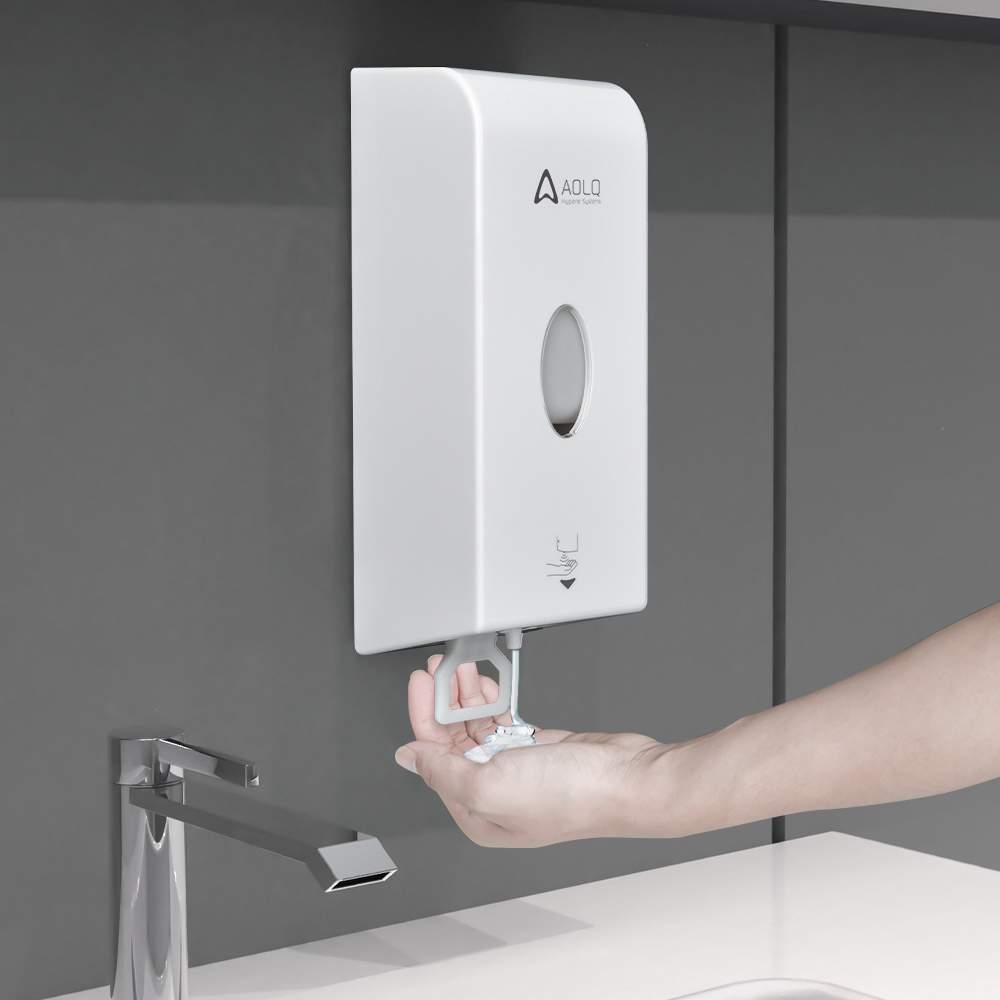
The Hygiene Imperative Both systems provide exceptional hygiene, especially when specified as touchless soap dispenser models. For hospitals, restaurants and food processing facilities, minimizing cross-contamination is a fundamental requirement. By eliminating a common touchpoint, automatic, sensor-operated dispensers become a core component of a facility’s hygiene protocol.
Application-Specific Recommendations: Finding the Perfect Fit
The most effective strategy is not an “either/or” choice but a “where and why” deployment. Match the dispenser to the zone.
- For High-Traffic, Efficiency-Driven Zones (Airports, Malls and Stadiums)
- System of Choice: Commercial foam soap dispensers.
- The Logic: In these environments, cost-per-use and maintenance efficiency are paramount. Foam’s ability to deliver more hand washes per refill directly reduces labor costs and consumable spending, delivering a powerful and measurable ROI at scale.
- For Specialized & Premium Environments (Kitchens, Clinics and Luxury Hotels)
- System of Choice: Industrial and commercial liquid soap dispensers.
- The Logic: Versatility is the key driver here. A wall-mounted liquid soap dispenser is the only choice for dispensing the heavy-duty degreasers needed in a commercial kitchen or the specific antiseptic scrubs required in a clinical setting. In a luxury hotel, it allows for the use of high-end, lotion-infused soaps to elevate the guest experience.
- The Hybrid Strategy: The Best of Both Worlds
- Most large, multi-use properties benefit from a hybrid approach. They install efficient foam dispensers in general public washrooms to control costs and manage high traffic.
Simultaneously, they deploy robust liquid dispensers in back-of-house areas, food service zones and premium guest suites to meet specialized operational and experiential needs.

Next Steps: Optimize Your Washroom Operations
The choice between foam and liquid soap dispensers is a strategic decision. There is no single “better” option—only the right solution for a specific application. By analyzing your facility’s traffic patterns, operational needs and user expectations for each zone, you can build a dispensing strategy that enhances hygiene, controls costs and improves satisfaction.
Frequently Asked Questions
1. Can I use regular liquid soap in a foaming soap dispenser?
No. Foaming dispensers require a special, water-like soap formulated to be aerated. Using standard thick liquid soap will not produce foam and will clog and permanently damage the specialized pump mechanism, leading to costly replacements and downtime.
2. Are automatic, touchless dispensers more reliable than manual pumps?
Modern commercial-grade automatic dispensers are engineered for high-traffic environments and millions of activation cycles. Beyond the superior hygiene, their key business advantage is consistency; they dispense a precise, measured dose every time. This eliminates waste from overuse and provides predictable, controllable consumable costs across your entire facility.
3. What material is best for a dispenser in a busy public washroom?
For maximum durability in demanding public spaces, 304 stainless steel is the industry reference point. Its high resistance to rust, corrosion and physical impact protects your investment and ensures a long service life. For other applications, high-impact ABS plastic is a durable and cost-effective choice that can be offered in various colors.
4. How important is a locking mechanism on a commercial soap dispenser?
A locking soap dispenser is essential for risk management in any public or unsupervised environment. It prevents vandalism, soap theft and intentional contamination of the reservoir, all of which lead to service interruptions, safety concerns and added costs. It is a standard feature on virtually all true commercial-grade models.
As a manufacturer with over 20 years of experience, AOLQ specializes in developing and producing a comprehensive range of commercial washroom solutions. Founded in 2002, we offer full OEM and ODM support to create dispensing systems in both foam and liquid formats that meet your exact functional, aesthetic and budgetary requirements.
Explore our full range of commercial dispensing solutions or contact our team to discuss your project needs and request a proposal.
Need help choosing commercial washroom products? Contact AOLQ for factory-direct options, OEM/ODM support, and bulk order guidance.


